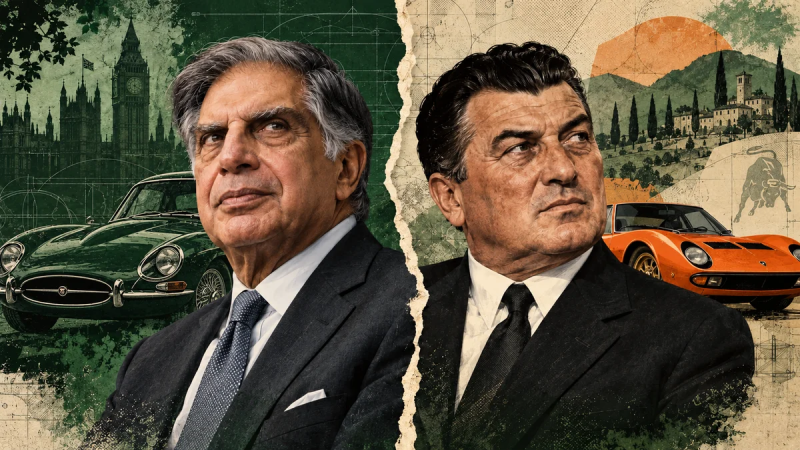
Tata’s purchase of Jaguar Land Rover is a documented acquisition, often packaged as a personal revenge story. The more useful business question is what happens after the signing: how an owner supports a carmaker through investment, product changes and the cost of keeping factories running.
In this article
Watch the story
The Short introduces the story. The article checks the specific claims it discusses; other statements in the video are not all independently verified here.
Subscribe to Vibe Economies on YouTube ↗What Tata actually bought
The completion announcement dated June 2, 2008 records a $2.3 billion all-cash purchase from Ford. The transaction included manufacturing facilities, design centres and intellectual-property rights. Ford also agreed to provide transitional support and continuing supplies.
That matters because a car brand cannot be separated neatly from the machinery and relationships that make its products possible. A buyer needs to understand which capabilities it owns outright and which still depend on the seller. The badge on the bonnet is only one part of the acquisition.
For someone studying a smaller acquisition, the same question is useful: what stops working when the previous owner leaves? Software licences, supplier agreements, customer relationships and technical knowledge can be as important as the asset named in the headline.
The 2026 plan: targets, not completed savings
In its June 17, 2026 strategy update, JLR set a £1.7 billion savings target and aimed to bring its breakeven point towards 300,000 vehicles over the following two years. It identified material costs, warranty and fixed costs as areas of focus, while reconfirming £18 billion of investment over FY24–FY29.
Those are management targets. They should not be reported as money already saved, or as proof that a turnaround has been completed. This article examines that dated update; it is not a claim to capture every development since June.
A lower breakeven point means a business aims to cover its costs at a lower level of activity. The useful follow-up is whether subsequent reporting demonstrates that change. A target alone does not tell us what assumptions management has made about prices, product mix or demand.
Why the acquisition price cannot answer everything
A purchase price is a point-in-time transaction figure. Investment and operating performance unfold over years. Comparing the original dollar price directly with a later sterling investment commitment would mix currencies, periods and fundamentally different measures.
To judge ownership over time, an analyst would want a consistent record of operating results, cash generation and capital invested. Brand recognition is relevant, but it is not a substitute for that record. Nor does a later difficult period by itself establish that the original purchase was a mistake.
This is why an acquisition story benefits from a second chapter. The announcement explains what changed hands. Later financial reporting helps explain whether the business can sustain the products and capabilities the buyer acquired.
A qualification to the Ford anecdote
The claim that Bill Ford personally humiliated Ratan Tata is disputed. Autocar Professional reported Ford’s denial in October 2024. Our Short uses the familiar founder-story framing; the acquisition should not be treated as proof of the alleged conversation or of a revenge motive.
For the evidence distinction, read our comparison of the Tata and Lamborghini origin stories. For a different automotive model, see Lamborghini’s low-volume business. Both cases reward looking beyond the memorable opening scene to the economics that follow.
Sources and scope
Sources reviewed October 17, 2026. Company statements are attributed to their issuers. Practical frameworks and interpretations are Vibe Wire’s analysis, not measured outcomes or financial advice.