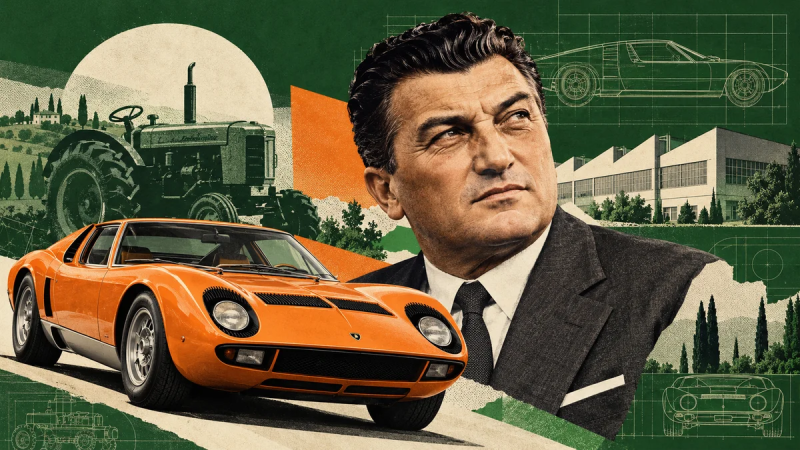
Lamborghini reported 10,747 deliveries and €3.20 billion in turnover for 2025. Its business offers a useful case study in generating substantial revenue without mass-market volume. The figures do not mean it sold fewer cars: the company described record deliveries.
In this article
Watch the story
The Short introduces the story. The article checks the specific claims it discusses; other statements in the video are not all independently verified here.
Subscribe to Vibe Economies on YouTube ↗Read the three measures separately
Lamborghini’s official financial summary also reports €768 million in operating income and a 24% return on sales for 2025. These are consolidated group figures. Deliveries count cars, turnover measures revenue, and operating income is a profit measure. None is interchangeable with the others.
The distinction matters when a successful brand becomes a short video. A large revenue figure can sound like money left over for the owner. It is not. Operating income also differs from net income and cash available for distribution.
Dividing revenue by deliveries would produce a rough ratio, not the price of a typical car. Without a detailed reconciliation of revenue sources and product mix, that calculation should not be presented as an average customer invoice.
Low volume is a business condition, not a magic trick
A specialist manufacturer has to recover substantial development and production costs across a relatively small customer base. That makes the economics of each sale important. A compelling design or a recognised badge may help attract a buyer, but production quality and the ownership experience still have to support the purchase.
Scarcity can be part of a luxury proposition. It can also reflect capacity constraints, product transitions or weak demand. A delivery total alone cannot distinguish those explanations. Claims that a company deliberately limits production to a particular level require additional evidence.
The useful lesson for a founder is to examine the relationship between price, delivery cost and customer expectations. Simply accepting fewer customers does not create a luxury business. Customers need a reason to prefer the product at the price being asked.
What the founder story adds
The Ferruccio Lamborghini Museum’s history describes an entrepreneur with an existing tractor business who recruited specialist engineers for his car venture. It places the automotive company’s opening in 1963. That background complicates the popular image of a company appearing from a single argument.
Previous operating experience can matter when a founder enters a new category. Hiring, supplier selection and manufacturing judgement are capabilities, even when they are less memorable than an encounter with a famous rival. They also take time to develop.
The museum is a source for the family’s account of that history, not an independent audit of every anecdote. Our origin-story evidence guide explains why we separate the founding timeline from purported private dialogue.
What to watch in future results
A useful follow-up would compare deliveries, operating margin and cash generation across several periods. Look for the company’s explanation of changes in product mix and costs. Do not assume that a record revenue year automatically means record profitability.
For a smaller business, the equivalent questions are practical: which customers are profitable to serve, what does customisation cost, and how much work is required after the sale? A premium price only helps if the business can deliver what it promises.
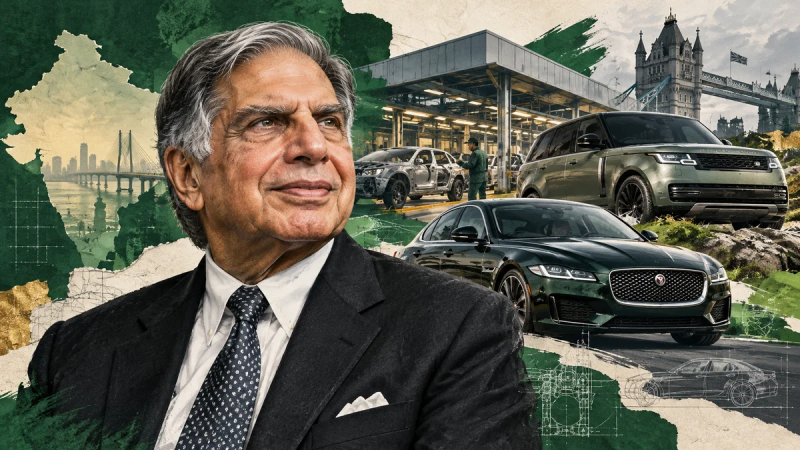
Lamborghini’s figures provide an automotive example, not a benchmark every startup should copy. Read the Tata and JLR acquisition analysis for a contrasting question: how an owner manages an established manufacturer through a long investment cycle.
Sources and scope
Sources reviewed October 17, 2026. Company statements are attributed to their issuers. Practical frameworks and interpretations are Vibe Wire’s analysis, not measured outcomes or financial advice.