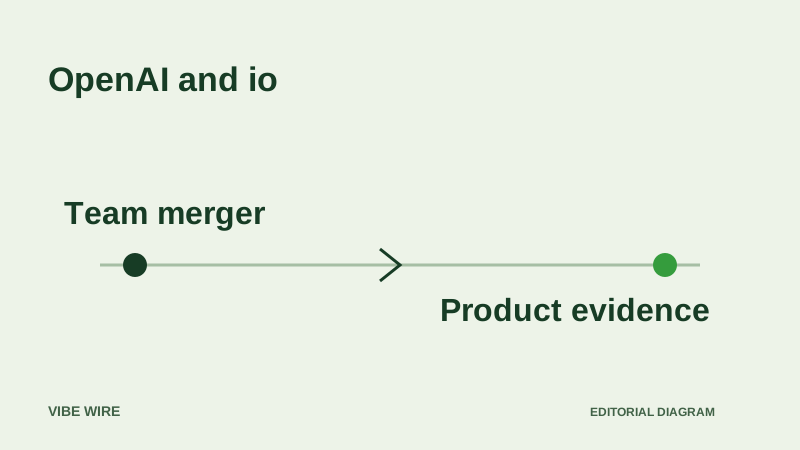
OpenAI’s announcement confirms that the io team merged with OpenAI and that Jony Ive and LoveFrom retained independent status while taking on design responsibilities. It does not, on its own, provide a specification sheet for a new consumer device.
In this article
Watch the story
The Short introduces the story. The article checks the specific claims it discusses; other statements in the video are not all independently verified here.
Subscribe to Vibe Economies on YouTube ↗The two dates in the announcement
The joint letter from Sam Altman and Jony Ive is dated May 21, 2025. It describes the collaboration and plans for the io team to merge with OpenAI. A July 9 update on the same page says the merger had officially happened and clarifies LoveFrom’s independent role.
- May 21, 2025The letter introduces the collaboration and planned team merger.
- July 9, 2025The update confirms the io team has merged with OpenAI.
- Product assessmentA specific device still needs its own specifications, availability and evidence of use.
The first two milestones are disclosed facts. The final step is the standard we use for evaluating a product claim. This article interprets that announcement rather than claiming to catalogue every subsequent rumour.
Separate the organisations
The announcement distinguishes io Products from LoveFrom. Saying OpenAI bought or absorbed everything associated with Jony Ive would erase that distinction. A person can take on design responsibilities through a collaboration without their separate creative organisation becoming the same legal business as the partner.
That matters because company stories often compress several entities into one familiar name. When a headline involves a founder, a studio and a technology company, identify which entity is actually merging and which relationship remains contractual or independent.
What evidence would make a device assessable?
Our product-analysis checklist begins with the intended task. Does the proposed device help someone do something they cannot conveniently do with existing hardware? Next comes the interaction: how does a person invoke it, understand its state, correct it and stop it?
Privacy and permission design also need visible answers. A system that listens, records or acts on someone’s behalf should make those states understandable to the user and to people nearby. A design pedigree does not answer those questions by itself.
Finally, examine availability, price, service dependence and support. A partnership announcement can explain who intends to build. A working product and published terms are needed to assess what a customer is actually being offered. We have not hands-on tested an unannounced device or inferred its specifications from concept imagery.
How to read hardware rumours without amplifying them
Keep a dated separation between an official statement, a reported claim and your own interpretation. If a source predicts a screenless product, that prediction should not become a confirmed feature merely because several sites repeat it. Trace the wording back to the original evidence.
The same applies to valuations. A transaction headline is not a retail price or a product-development budget. This article deliberately avoids deriving such figures from the collaboration letter, which does not supply them.
For a useful comparison, HP’s Humane agreement explicitly lists the capabilities it intended to acquire. Read the nouns in both announcements before drawing conclusions about the devices customers will eventually use.
Sources and scope
Sources reviewed October 17, 2026. Company statements are attributed to their issuers. Practical frameworks and interpretations are Vibe Wire’s analysis, not measured outcomes or financial advice.